Kuala Lumpur
City
14-day Malaysia itinerary
A two-week journey from Kuala Lumpur and Penang into the rainforests, mountains and islands of Malaysian Borneo.
A larger first journey
Fourteen days can support both Peninsula Malaysia and Malaysian Borneo when the route is disciplined. Kuala Lumpur and Penang establish urban, cultural and food context; Sarawak and Sabah then shift the trip into river, rainforest, mountain and island landscapes. The value is not the number of states visited. It is how clearly Malaysia changes between them.
This route is strongest for first-time visitors who want variety, are comfortable with domestic flights and are genuinely interested in city, food, culture and protected landscapes. It is less suitable if flying during a holiday feels burdensome, if one or two bases are your natural limit, or if you want deep exploration of a single state.
The route-defining choice
Peninsula-only alternative
This sequence uses the same two weeks for a slower overland shape and more depth in each stop. It is not reproduced as a second itinerary here; compare the published 10-day route for its connection logic.
The signature progression
The sequence describes how the journey changes; it is not a literal map or a claim that any one place represents an entire region.
Kuala Lumpur
Penang
Sarawak
Sabah
Route board
Here, “two regions” means Peninsula Malaysia and Malaysian Borneo as the route's planning contrast—not that Malaysia has only two geographic or cultural regions.
City
Heritage + food
Rainforest + culture
Mountain + sea
Reality check: fourteen calendar days are not fourteen full sightseeing days. Arrival, airport access, domestic flights, transfers, weather and departure remove usable hours. The light days in this plan are intentional.
Kuala Lumpur
The first task is orientation and recovery. Kuala Lumpur will still be here tomorrow; use the first evening to understand one district rather than conquer the city.
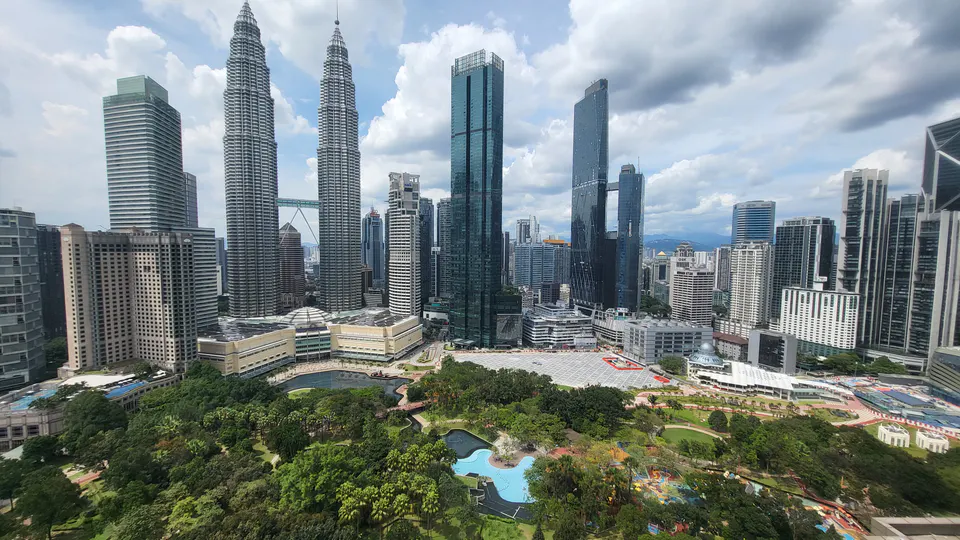
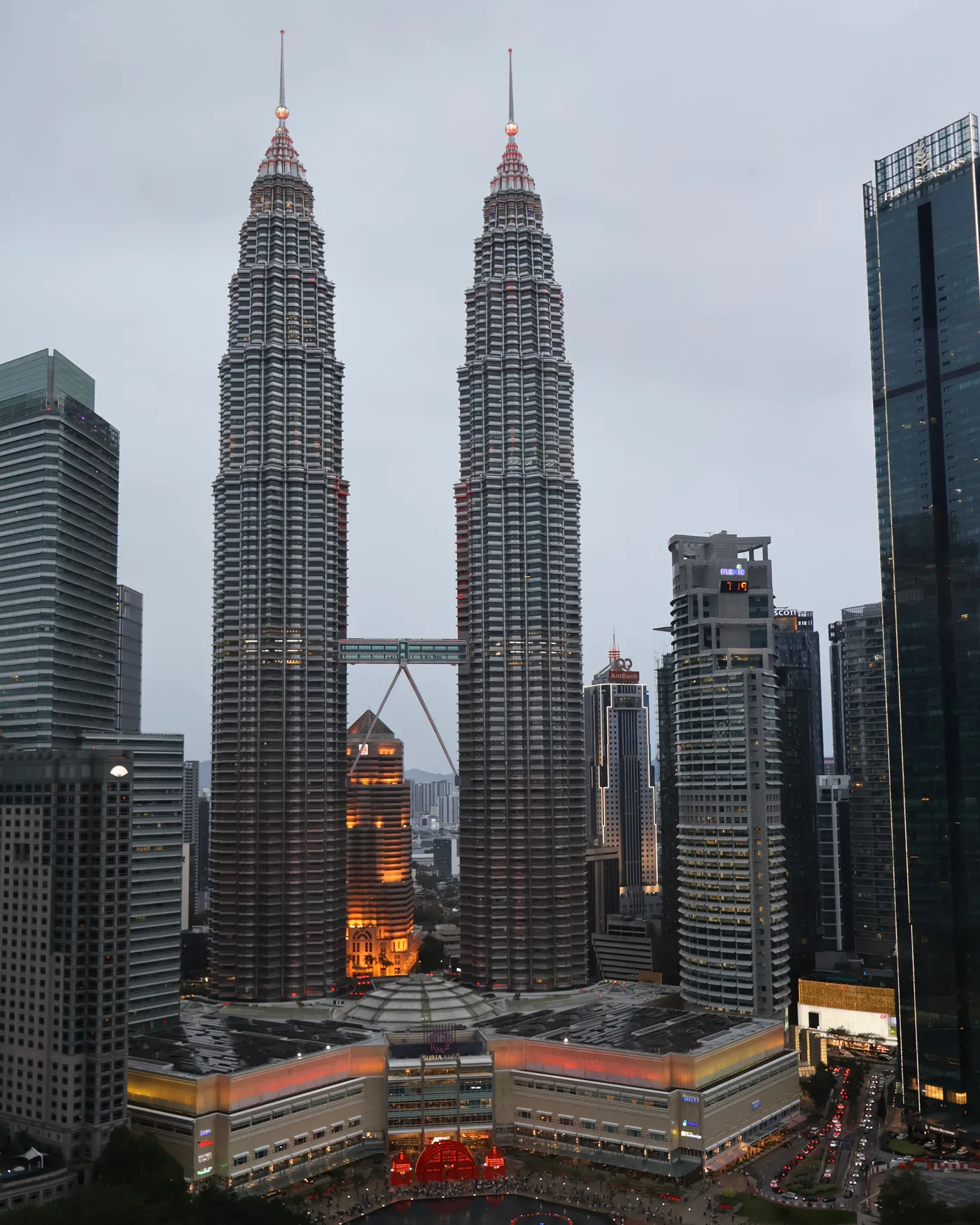
A vertical city of towers, parkland and evening light—the dense urban opening before the route moves north and east.
Use KLCC for an easy orientation: the Petronas Twin Towers surroundings and KLCC Park form one coherent cluster. If your base is elsewhere, choose a food or neighbourhood evening close to it.
An early arrival can support a longer walk and skyline evening. An afternoon arrival calls for one district. A late arrival needs only dinner and rest.
Keep every sightseeing element removable until immigration, baggage, airport transfer and hotel access are complete.
Kuala Lumpur
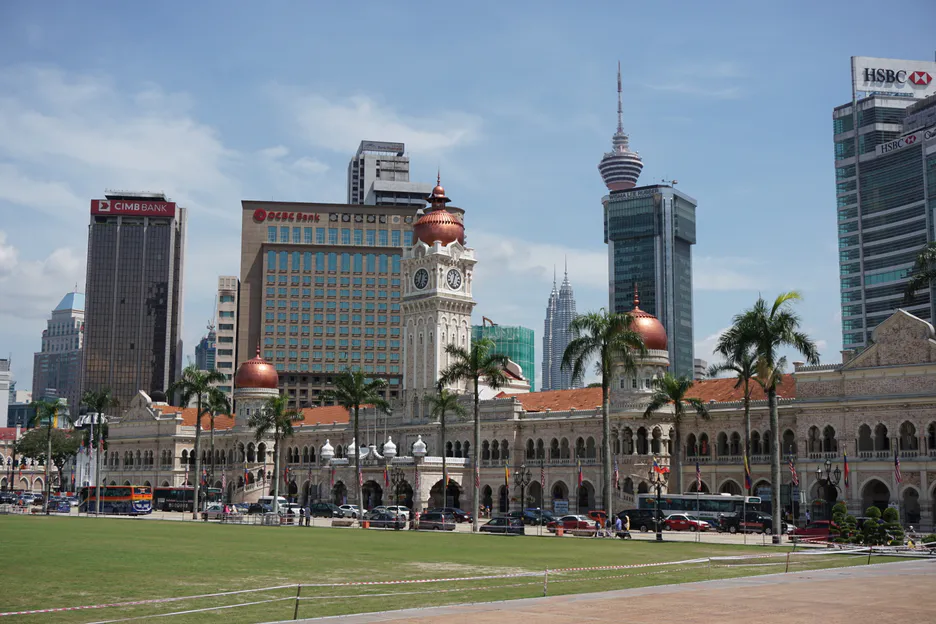
Batu Caves, the civic core and Chinatown each ask for real time. Build the day from compatible clusters instead of crossing the city to complete a list.
Batu Caves lies in Gombak, Selangor, outside central Kuala Lumpur. Treat it as a purposeful excursion with transport, weather and respectful conduct built into the plan. It can lead into a central-city afternoon, but not every other major district by default.
Merdeka Square, the Sultan Abdul Samad Building exterior, nearby civic architecture, Central Market and Petaling Street can form a more continuous story. Choose the elements that interest you and use meals and shade to control the pace.
Return to KLCC only if the route and energy make sense. The Petronas surroundings at night can complete the contrast; they are not a compulsory encore after a full day.
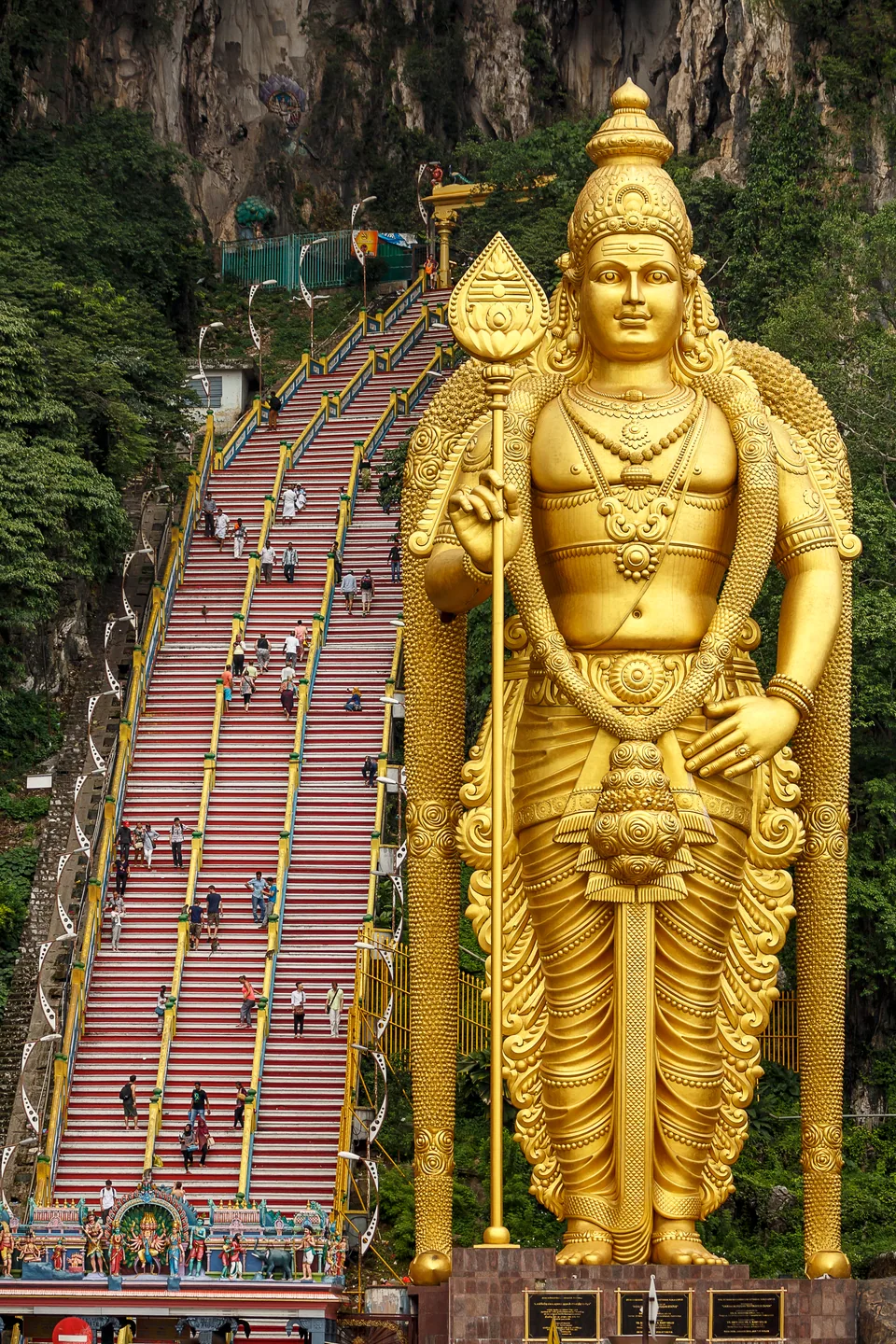
Sacred setting, civic architecture, market streets and contemporary city scale.
Choose Batu Caves plus one central cluster, or make the historic centre the whole day with more interiors and food.
Batu Caves offers a landmark excursion; the central route reduces movement; museums or covered markets provide more weather flexibility.
Remove the geographically distant cluster first when the day begins late or transport takes longer than expected.
Kuala Lumpur
A third Kuala Lumpur day is not filler. It allows you to choose a version of the city that the landmark route could not hold without rushing.
Revisit the modern centre at a slower scale, add an architectural interior that is currently open, or connect civic Kuala Lumpur without the pressure of Batu Caves.
Choose one neighbourhood and let markets, cafés, restaurants and street life structure the day. Food works best as part of place, not a race between distant recommendations.
A museum, gallery, mosque context or heritage building can hold the middle of the day. Verify current exhibitions and access rather than treating institutions as permanently interchangeable.
One neighbourhood, one long meal and an evening view can be a complete final day in the city. The value is having time to change your mind.
Kuala Lumpur beyond the first-impression skyline and landmark circuit.
Select one theme—architecture, food, culture or a deliberately slow neighbourhood day.
Use weather and energy to decide whether the day is mostly outdoors, institution-led or food-led.
This is the pressure-release day. Do not refill it with every attraction removed from Days 1 and 2.
Kuala Lumpur → Penang
Rail creates a station-to-water transition through Butterworth; flying is also legitimate. Compare the whole door-to-door journey rather than one advertised duration.

KTMB ETS serves Butterworth. From the mainland interchange, the passenger ferry connection continues towards George Town. Verify current official rail and ferry information for the travel date.
The Peninsula route moving from inland metropolis towards the Straits and George Town.
Choose rail to Butterworth plus the onward crossing, or a flight when its schedule and airport sequence work better.
Rail offers a tangible overland progression; flying can protect time in some schedules. Both include access, waiting, luggage and onward transfer.
Keep the George Town evening flexible: a short heritage walk and food are enough after arrival.
George Town · Penang
George Town works at close range. Shophouses, living religious places, trade, food and waterfront history overlap; the day needs selection, not speed.

Use Armenian Street and surrounding lanes as orientation rather than a scavenger hunt. Add Little India, selected clan or religious architecture and the Esplanade when the route remains coherent. Choose interiors for their stories, not because every doorway must be completed.
Char koay teow, assam laksa, Hokkien mee, nasi kandar and cendol are representative choices, not a compulsory tasting flight. Appetite, dietary needs, opening information and neighbourhood matter more than collecting dish names.

A working hawker setting makes the planning choice visible: meals can shape the route through George Town rather than interrupt it.
Layered streets where architecture, worship, commerce and food remain part of contemporary city life.
Build a heritage-core walk with one meaningful interior and one food context.
A waterfront finish opens the day out; a museum or mansion provides indoor depth; a neighbourhood evening keeps the focus intimate.
Humidity, rain and repeated stops slow a walking day. One strong interior is often more useful than three rushed admissions.
Penang
This is a choice between elevation and depth. Neither route is the consolation prize.
Kek Lok Si and Penang Hill share an Air Itam direction, so they pair more naturally than unrelated stops across the island. Temple scale and an elevated view create contrast with George Town, but weather, queues and current operations determine how well the combination works.
Return to streets passed too quickly, choose another cultural interior, explore food by neighbourhood and give the waterfront or evening city more space. A second day turns first impressions into context.
Penang Botanic Gardens or another currently accessible green experience can shift the rhythm. Combine it selectively with the city rather than starting a scattered island-wide circuit.

Penang from monumental and elevated scale, or George Town at slower street level.
Commit to the Air Itam-and-hill direction or remain in George Town for depth.
Cloud and queues can lower the value of elevation. Personal interest—not fear of missing out—should decide whether you leave the heritage core.
Kek Lok Si and Penang Hill form a full pairing. Remove one when the day begins late or conditions deteriorate.
Penang → Kuching
This is not simply an airport hop. You are leaving the Peninsula, crossing the South China Sea and arriving in Sarawak, one of Malaysia's two Bornean states.

A domestic flight is the practical route logic here, but flight duration is only one part of the day. Hotel checkout, airport transfer, check-in and security, waiting, baggage and the journey into Kuching all count. Airlines and schedules can change, so the itinerary does not promise a particular service.
Keep arrival light: walk along Kuching Waterfront, use the Sarawak River to orient the city, explore a nearby heritage street or choose an easy food evening. The river is the gateway into the next part of the journey, not a prelude to a packed excursion.
Kuching · Sarawak
Kuching is not merely the departure point for wildlife and rainforest excursions. Its river, streets, food and institutions provide the contemporary context those nature days need.
Kuching Waterfront places the south bank, river crossing and civic skyline into one readable scene. Main Bazaar runs close to the waterfront; Carpenter Street sits within the historic fabric behind it. Walk slowly enough to notice how commerce, food, worship and daily city life overlap.
Sarawak's diversity belongs in the present tense. Use museums, architecture, foodways, languages, craft traditions and documented histories to build understanding. Do not reduce living communities to generic “tribal” imagery or treat cultural places as performances staged for visitors.
A current museum or cultural institution can hold the hottest or wettest part of the day. Check exhibitions, access and operating information directly. Then return to street and river context rather than forcing a second major excursion.
A contemporary river city that anchors culture, food and history before the route enters protected landscapes.
Connect Waterfront, Main Bazaar, Carpenter Street and one cultural institution or heritage cluster.
Emphasise museum context, food and streets, or a river-led day depending weather and interest.
Keep the centre coherent. The value comes from understanding the city rather than collecting dispersed landmarks.
Semenggoh + Kuching
Semenggoh is a structured wildlife-and-conservation visit, not an appointment with an orangutan.

A possible observation, never a promise
Sarawak Forestry describes Semenggoh Wildlife Centre as a conservation, research and education setting within Semenggoh Nature Reserve, providing a natural haven for semi-wild orangutans. Conditions, food availability and animal behaviour influence whether any are visible.
The photograph shows what may be observed; it does not predict your visit. Follow current staff guidance, maintain appropriate distance and never touch, feed or approach wildlife.
Choose an appropriate current cultural institution or experience only after checking its location and transport implications. Do not automatically join two distant, timed activities.
Return to the waterfront, museum context, heritage streets or a food area that Day 8 left unexplored.
Let Semenggoh be the day's only structured commitment, then keep the city flexible around weather and energy.
Wildlife within a forest and conservation context rather than a zoo-style guaranteed display.
Use current official visitor guidance and make the conservation visit the day's anchor.
Add cultural depth, return to Kuching, or leave the second half deliberately open.
One timed nature commitment is enough. Do not compensate for an uncertain sighting by overpacking the rest of the day.
Bako National Park
Bako compresses rainforest, mangrove and rugged coast into one protected landscape. Its value remains even when animals stay out of sight.

Sarawak Forestry identifies Bako as Sarawak's oldest national park and describes a mix of lowland forest, mangroves, peat swamp, heath forest and coastal cliffs. That ecological concentration—not a single famous species—is the reason for the day.
Access involves a road journey to the Bako area followed by a boat connection to the park. Current registration, boat, trail and visitor guidance must be checked directly. Weather, tide and boat conditions can change what is sensible.
Proboscis monkeys and other wildlife are associated with Bako, but nature is not a scheduled performance. Stay on authorised marked routes, follow ranger guidance, keep distance from animals and avoid improvising coastal or forest access.
Rainforest meeting mangrove, beaches, cliffs and weather-exposed coastline.
Use the current park system to choose an appropriate marked route and allow time to notice habitat changes.
The real choices depend on current trail access, weather, fitness and boat arrangements—not an evergreen list of guaranteed stops.
Road plus boat already make this a structured day. One suitable landscape route is enough.
Kuching → Kota Kinabalu
The second flight is a conceptual transition between two distinct Borneo states, not evidence that Sarawak and Sabah are one compact destination.
The trip leaves a river-oriented cultural gateway and the coastal forest context of Bako.
The next base faces offshore islands while the Kinabalu highlands rise inland as a separate outing.

Borneo's visual emphasis change from Kuching's river to Kota Kinabalu's coastal horizon.
Complete the flight and use the waterfront, city centre, food or sunset as a light orientation after arrival.
A short coastal walk or meal works; a major island or highland plan does not belong after an uncertain airport day.
Hotel checkout, airport procedures, baggage and city transfer make this a real travel day.
Kinabalu Park / Kundasang
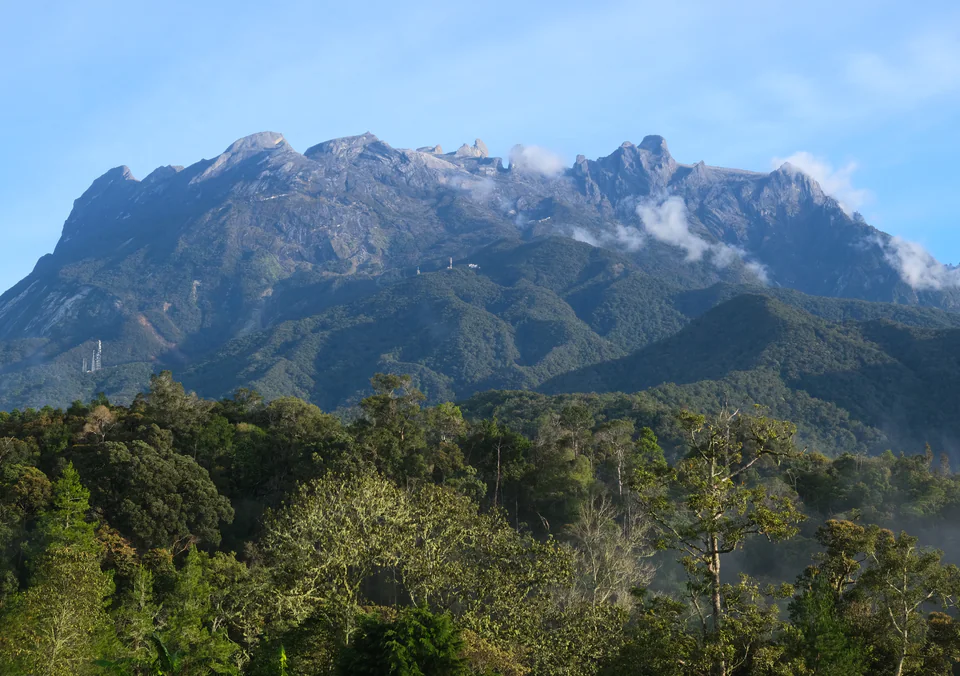
This itinerary does not include a Mount Kinabalu summit climb. Kinabalu Park is valuable as mountain, ecological and botanical landscape without turning the day into an ascent.
Kinabalu Park was inscribed on the UNESCO World Heritage List in 2000 under natural criteria (ix) and (x). UNESCO identifies an exceptional altitudinal range and botanical richness across habitats from lowland rainforest to montane forest and high-elevation vegetation.
For a general visitor, the park can provide ecological interpretation, botanical context, forest atmosphere and mountain scale. Sabah Parks identifies Park Headquarters as the main visitor entry area. Current operating details and road transport should be verified before departure.
Kundasang provides surrounding highland context, but should not be described as being inside Kinabalu Park. This is a substantial road outing from Kota Kinabalu, and cloud can hide the mountain even when the plan is otherwise successful.
A monumental granite mountain rising through ecological zones and cooler highland terrain.
Prioritise Kinabalu Park's landscape and interpretive or botanical value, with Kundasang context when timing and conditions support it.
A park-focused day provides depth; additional highland stops should be selected only when they support the mountain story rather than scatter it.
Leave early enough for the road commitment, but do not promise a clear view or compress the return around a fixed photograph.
Kota Kinabalu + island choice
Tunku Abdul Rahman Park creates an immediate contrast with the highlands, but it is still a boat-dependent protected marine setting—not a guaranteed all-weather outing.

Sabah Parks describes Tunku Abdul Rahman Park in Gaya Bay offshore from Kota Kinabalu, comprising five islands with surrounding reefs and sea. Choose current authorised boat arrangements and follow park and operator safety guidance.
Use Kota Kinabalu's waterfront, markets or food context and a coastal viewpoint appropriate to current conditions. This is a legitimate slower choice after the mountain road day.
When marine conditions undermine an island plan, move toward city, cultural or food activities whose timing is easier to control. Do not force a boat day to preserve the itinerary label.
Forested islands and open water after the vertical scale of Kinabalu.
Choose one current island arrangement or keep the day in Kota Kinabalu and along the coast.
The island day offers stronger environmental contrast; the city-and-coast option provides flexibility and less structured movement.
Boat logistics define the island version. Avoid trying to stack several unrelated land activities around it.
Kota Kinabalu · departure
Day 14 may be only checkout and airport movement. If more time exists, use it close to the city and keep every activity easy to abandon.
Pack the night before, check out and travel to the airport with a realistic margin. There is no planning failure in having no attraction on departure morning.
Choose breakfast, waterfront or a compact flexible stop that does not create a luggage or cross-city problem.
Use a city, food or mainland coastal choice whose return remains fully under your control. Keep cleanup, luggage collection and airport movement explicit.
The route has moved from city to heritage, rainforest, mountain and sea. Its final discipline is simple: leave enough room to complete the journey safely rather than squeezing in one more landscape.
Borneo decision matrix
This is a comparison of planning character, not a competition and not a claim that either state is exhausted by one gateway.
Kuching / Sarawak
Kota Kinabalu / Sabah
This itinerary includes both because fourteen days makes the contrast possible—not because four nights can represent either state completely.
Expectation matters
Wildlife sightings cannot be guaranteed at Semenggoh, Bako or anywhere animals remain free to respond to forest conditions. Food availability, weather, time, animal behaviour and simple chance influence what visitors see.
That uncertainty is not a flaw in the experience. Conservation areas are not entertainment stages. Follow official and local guidance, maintain appropriate distance, and judge the day by the landscape and conservation context as well as any sighting.
The cost of crossing Malaysia
Penang → KuchingThe journey crosses from Peninsula Malaysia into Sarawak, with arrival procedures and a new city orientation.
Kuching → Kota KinabaluThe route changes Bornean state and shifts from a river gateway toward Sabah's coast and highlands.
Both flight days remain deliberately light because advertised flight duration is never the full cost of moving.
A valid alternative
Remove Borneo when domestic flights would dominate your enjoyment, international arrival or departure creates awkward connections, the trip goal is beach-heavy, or budget and luggage logistics make extra flights undesirable. A slower Peninsula route can offer more continuity and greater depth.
Weather and flexibility
KL heat and rain affect walking; Penang cloud changes elevated views; Sarawak rain and coastal conditions influence Bako; cloud can hide Kinabalu; and Sabah's marine conditions shape island travel. Flexibility means preparing useful substitutions before conditions decide for you.
Outdoor → indoorUse a museum, market or food-led period instead of a long exposed walk.
Mountain view → city cultureLet ecological or institutional context carry a cloudy day rather than chasing visibility.
Island → Kota KinabaluReplace boat dependency with flexible city, coast and food choices.
Structured nature → flexible cityKeep Kuching or Kota Kinabalu options ready when operations change.
Experience choice index
Use these planning attributes to compare experiences. They are not rankings and do not predict conditions.
Best forFirst-time city scale
Planning characterHigh flexibility
ConditionOutdoor heat and rain
Best forLandmark and cultural setting
Planning characterHalf-day-compatible
ConditionHeat and rain relevant
Best forHeritage and food
Planning characterVery high flexibility
ConditionWalking conditions matter
Best forElevated view
Planning characterMore structured
ConditionWeather important
Best forConservation and wildlife context
Planning characterStructured visit
ConditionWildlife not guaranteed
Best forRainforest and coast
Planning characterRoad-and-boat logistics
ConditionWeather important
Best forMountain and ecological landscape
Planning characterSubstantial road outing
ConditionWeather highly relevant
Best forIsland and coastal contrast
Planning characterBoat-dependent
ConditionMarine conditions matter
Area logic, not hotel lists
Central transport convenience can simplify arrival and departure. KLCC supports skyline orientation; Bukit Bintang or Chinatown can prioritise food, nightlife or heritage access.
A heritage-core position reduces repeated transport for Days 4–6. Check the real walking route and evening context, not only a broad district name.
Central or waterfront access supports the city days and simplifies pickup logic. A quieter position may suit rest but can increase local movement.
Central or waterfront convenience supports orientation and island logistics. This route uses Kota Kinabalu as the base; a Kundasang overnight is not mandatory.
Before you go
Keep city texture flexible, but verify the movements and protected-area information that make the two-region route work.
Plan the real journey
Treating flight days as full sightseeing days.
Adding Borneo only to tick it off.
Assuming wildlife sightings are guaranteed.
Scheduling Bako rigidly without weather awareness.
Trying to add a Mount Kinabalu summit climb casually.
Expecting a clear mountain view at a fixed hour.
Overpacking Penang instead of choosing depth.
Putting a boat-dependent activity before an important flight.
Booking separate transport legs without a reasonable buffer.
Assuming all of Malaysia feels culturally or geographically the same.
Continue with published guidance
Transport, park access, weather-dependent operations and immigration procedures should be rechecked with the relevant official authorities and operators before travel.